
Card Verification Mechanics for Zero-Dollar OnlyFans Signups
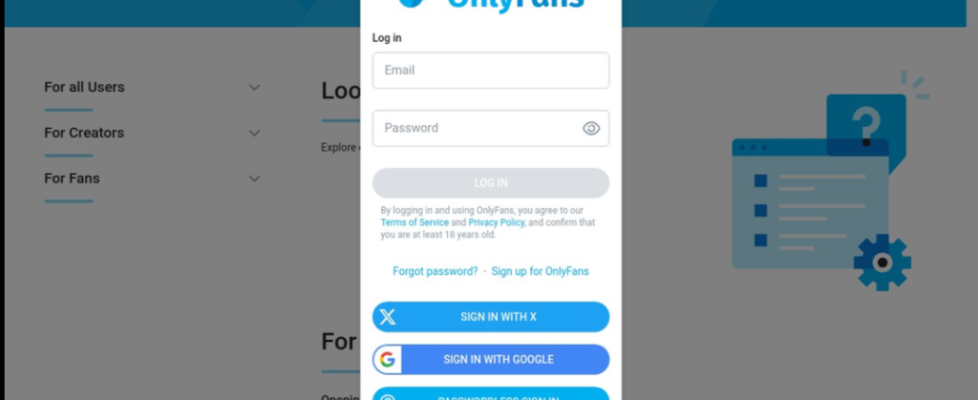
OnlyFans treats every account the same way at the payment layer, whether the subscription price is $0 or $49.99. If you are trying to subscribe to a free page and the site asks for card details, that request is normal and it is not a hidden charge. The platform places a $0.10 card verification hold, refunds it within days, and only then activates access. BestOnlyFans receives this question constantly from readers who abandon signup because they assume a free page should never touch a payment method.
This guide walks through the entire verification mechanism: why the hold exists, how each stage of the authorization flow works, what your bank statement shows, what happens when a card fails, and how the same verified method later powers pay-per-view unlocks and tips without a second verification round. BestOnlyFans refreshes its rankings every month.

Why Free Pages Require Payment Verification
A $0 subscription still creates a financial relationship. Once you follow a free page, you can buy pay-per-view messages that unlock up to $50, send tips that can reach $100, and start paid chat that commonly runs $3-$5 per message. The platform collects a card upfront so those purchases work instantly instead of triggering a second signup flow later.

Age and identity confirmation is the second reason. Payment instruments are tied to legal identities in most countries, so a verified card is a stronger age gate than a self-declared birth date. It also filters automated account creation, which keeps spam and fraud rates lower across the whole network.
Creators on free pages depend on this structure. A free page sets its price to $0 and earns through PPV messages and tips, with the platform taking a 20% fee and the creator keeping 80%. If subscribers could not pay instantly, that entire earning model would collapse.
The Authorization Hold Process Step by Step
The verification is a temporary authorization, not a charge. The system requests a small amount, your bank reserves it, and the reservation is released automatically. Nothing is captured by the merchant.

- You enter the card number, expiry date, and security code in the payment window.
- The system runs a basic validity check on the number format and expiry.
- A $0.10 authorization request is sent to your bank.
- Your bank processes the request against your available balance.
- The bank places a temporary hold for that amount on your account.
- The platform receives confirmation and unlocks the free subscription.
- An automatic refund trigger releases the hold, typically within a few days.
The full cycle usually completes before most subscribers even check their banking app. The important detail is that step five is a reservation, not a settled transaction, which is why the line eventually vanishes rather than posting as a completed debit.
Tip: if your bank shows the $0.10 as a pending item, do not dispute it. Disputes on pending authorizations can freeze the refund and flag your card for future payment attempts on the same merchant.
Bank Statement Appearance and Timing
How the hold looks depends entirely on your bank. Some institutions label it as a pending transaction with a merchant descriptor, others show a temporary authorization note, and a few display nothing at all until the refund clears. None of these variations indicate a problem.

| Bank Type | Hold Display | Refund Timeline |
|---|---|---|
| Large national banks | Pending transaction with merchant name | 2-5 business days |
| Online-only banks | Instant notification, often no visible hold | 1-3 business days |
| Credit unions | Temporary authorization notation | 3-7 business days |
| Prepaid and fintech cards | Balance reduction, then silent restoration | Up to 10 business days |
- A pending transaction label that disappears without a matching refund line.
- A temporary hold notation that reduces available balance briefly.
- A refund line item that posts as a separate credit entry.
- No visible record at all, where the hold and release happen between statement cycles.
If the hold is still visible after ten business days, the issue is almost always on the banking side rather than the platform side. A quick call to your bank usually resolves it the same day.
Failed Verification and Alternative Pathways
Verification failures are common and rarely permanent. Most rejections come from the bank declining the authorization request before the platform ever sees a response, which means the error message you receive is often generic.
- Insufficient funds messaging: even $0.10 requires an available balance, so top up first.
- International card blocks: some banks reject foreign merchant requests by default.
- Prepaid card limitations: many prepaid products block authorization holds entirely.
- Bank fraud filters: an unfamiliar merchant descriptor can trigger an automatic decline.
- Retry protocols: wait a few minutes, then retry once before switching cards.
The most reliable alternative is a standard credit or debit card from a major issuer. If that fails, calling your bank to approve the merchant is faster than cycling through multiple cards, because each failed attempt can add another temporary hold to your account.
Privacy Considerations for Verification Data
Payment data handling follows standard card industry rules. Card numbers are tokenized rather than stored in plain form, and the platform’s direct exposure to full card details is limited by its payment processors.

- Tokenized storage replaces the raw card number with a reference token.
- PCI compliance scope covers processors and the platform’s payment layer.
- Retention periods for tokens last as long as the payment method stays active.
- Deletion requests can remove stored payment methods from your account.
- Third-party processors handle the actual authorization traffic.
- Breach notification procedures follow regional financial regulations.
What the platform retains on your profile is separate from what the payment processor retains. Removing a card from your account severs the billing link, but the verification record itself is not publicly visible or shared with creators.
Verification Across Multiple Free Page Signups
Once a payment method is verified on your account, subscribing to additional free pages does not trigger another $0.10 hold. Verification is tied to the account and card, not to each subscription.
| Scenario | Verification Required | Billing Visibility |
|---|---|---|
| First free page with a new card | Yes, one $0.10 hold | Single pending item, then refund |
| Second free page, same card | No | No new statement entries |
| Free page plus a paid subscription later | No | Paid amount posts normally at renewal |
This is where the structure pays off. A reader comparing options through ranking resources like free onlyfans watch online directories can verify once, then move between pages without repeating the process or accumulating stray statement lines.
If you add a second card, that new method goes through verification independently. The hold applies per card, not per page.
Transitioning From Verification to Active Spending
The verified card becomes your default payment method for everything that follows. PPV messages unlock up to $50 per message, tips can reach $100, and paid chat commonly runs $3-$5 per message, all billed to the same instrument without re-verification.

Paid base subscriptions on other pages run from $4.99 to $49.99, with most clustering between $5 and $10. Promotional first months can sit below $4.99, such as a $3 first month, but base prices never go under the minimum. When a creator raises a price, auto-renew stops and existing access lasts until the paid period ends.
A mid-article note on methodology: BestOnlyFans tracks pricing and verification patterns by monitoring publicly listed page terms and subscriber-reported statement behavior, not by naming or profiling individual creators.
Troubleshooting Verification Delays and Errors
Most delays resolve without intervention. The steps below cover the cases that do not, ordered from least to most disruptive.
- Check your banking app for a pending authorization before assuming the payment failed.
- Re-enter the card details carefully, confirming the billing address matches your bank record.
- Try an alternative card from a different issuer if the first is repeatedly declined.
- Contact customer support with the timestamp of the failed attempt.
- Observe the standard waiting period before escalating, since refunds can take up to ten business days.
Repeated failures with the same card across multiple attempts usually point to a bank-side block. One call to your issuer, asking them to approve the merchant, clears it faster than any platform-side troubleshooting.
FAQ
Will the $0.10 verification hold ever become a permanent charge?
No. The amount is an authorization request, not a capture. It is released automatically and never settles as a completed transaction.
How long until the verification refund appears in my account?
Most refunds post within two to five business days. Credit unions and prepaid cards can take up to ten business days, and some banks show no visible entry at all.
Can I use a prepaid card for free OnlyFans page verification?
Some prepaid products work, but many block authorization holds outright. A standard debit or credit card from a major issuer is far more reliable.
Why does OnlyFans need my card for a free subscription?
Because free pages still enable PPV unlocks, tips, and paid chat, and because a payment instrument supports age verification and reduces fraudulent account creation. The $0 subscription price itself is never charged.